

Foreclosure buyers rarely need just one type of source. Some searches start with early property signals, while others begin with public listings, auction pages, or record checks. A buyer looking at HUD-owned homes will not use the same process as an investor tracking pre-foreclosure leads. Auction inventory also needs a different level of caution than a listed home on a familiar real estate portal. A better search starts by matching the site to the property stage.
This list brings together foreclosure-first research, public listing portals, official inventory, auction sources, Freddie Mac-owned homes, and property record tools. ForeclosureHub takes the first spot because it is built around foreclosure search, owner data, skip tracing, alerts, and property-level research. Realtor.com and Redfin help users check visible listings in a more familiar search environment. HUD Home Store and HomeSteps cover specific official inventory, while Hubzu adds auction-stage property review. PropertyShark rounds out the list with deeper records and local property details.
Here is why each company was selected:
- ForeclosureHub: Best for foreclosure-specific discovery, owner data, skip tracing, alerts, and property records;
- Realtor.com Foreclosures: Best for checking visible foreclosure listings through a familiar home search platform;
- Redfin Foreclosures: Best for comparing listed foreclosures with local market context and agent-supported browsing;
- HUD Home Store: Best for HUD-owned homes and official government property inventory;
- Hubzu: Best for online real estate auctions, bank-owned homes, and auction-stage property review;
- Freddie Mac HomeSteps: Best for Freddie Mac-owned homes and post-foreclosure inventory;
- PropertyShark: Best for foreclosure records, ownership details, liens, and local property research.
The ranking is based on how each source can support foreclosure research, not on general real estate popularity.
1. ForeclosureHub
ForeclosureHub is a foreclosure-first platform for users who need property data, owner research, skip tracing, and alerts in one search process.
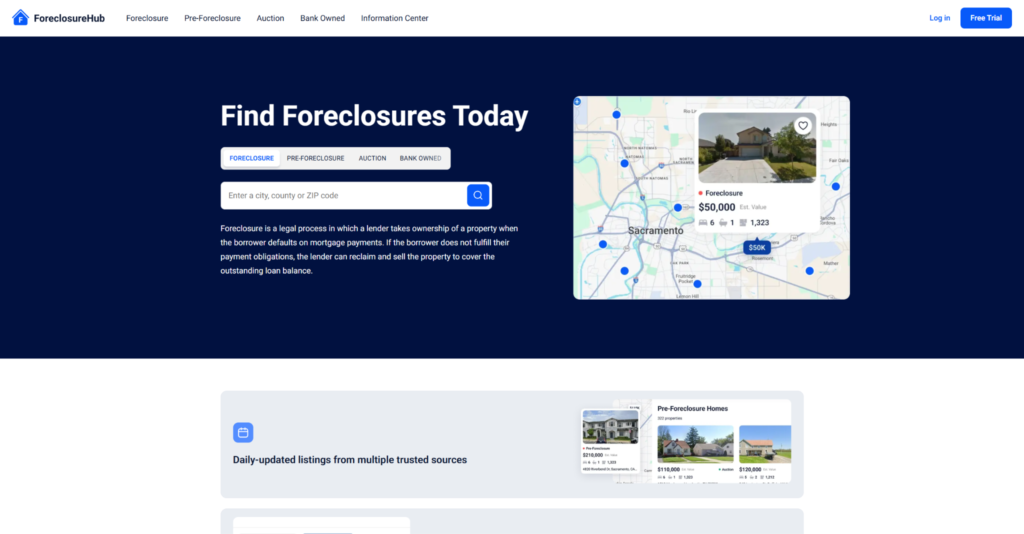
ForeclosureHub leads the list because it is built for foreclosure research rather than broad home browsing. Users can search pre-foreclosure, foreclosure, bank-owned, and auction listings across the United States. The ForeclosureHub foreclosure listings tool brings distressed property data into a focused search system for buyers and investors who want cleaner discovery before deeper review. The platform also helps users check owner details, mortgage data, tax records, transaction history, and market context before deciding which properties deserve more attention. That makes it a stronger starting point than a basic public listing page.
ForeclosureHub’s main value is the way it brings property data and owner research closer together. Free skip tracing is included with every property search, which gives users an extra layer of contact research without a separate paid step. Saved searches and email alerts help users monitor new matching properties without repeating the same search manually. Some county data may update faster than others, and there is no dedicated mobile app yet. Even with those limits, ForeclosureHub fits users who want an earlier and more focused foreclosure search.
ForeclosureHub is most helpful when the user needs more than a basic listing page. It should be treated as a research tool, not legal or financial advice:
- Pre-foreclosure, foreclosure, bank-owned, and auction listings;
- Free skip tracing included with every property search;
- Owner, mortgage, tax, assessment, and transaction details;
- Market data for sale, rental, and comparable property checks;
- Saved searches and email alerts for matching properties.
ForeclosureHub is the strongest starting point for users who want early property signals and owner-level research before comparing public listings or auction sources.
2. Realtor.com Foreclosures
Realtor.com Foreclosures is a public listing source for buyers who want a familiar way to browse foreclosed homes and visible property details.
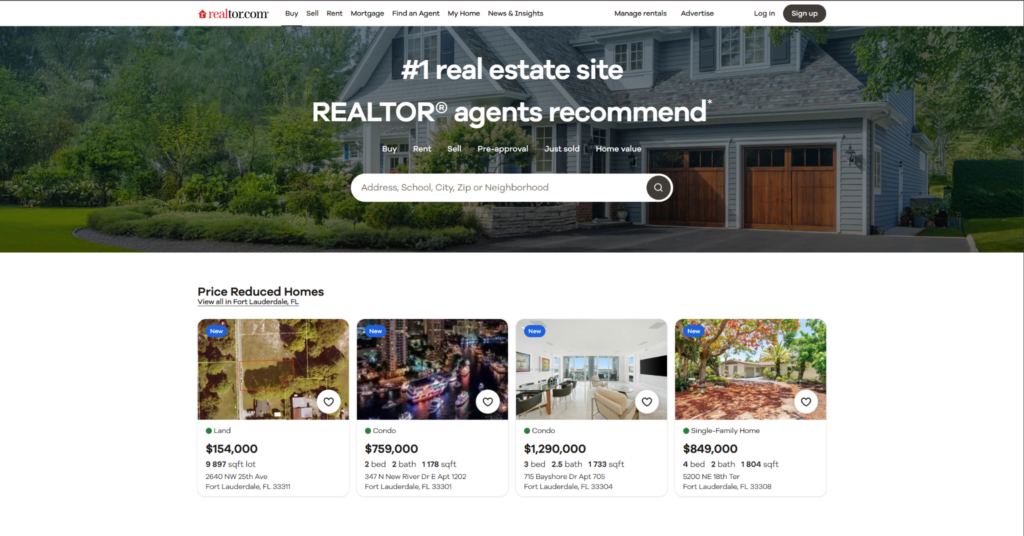
Realtor.com Foreclosures gives users a simple way to check visible foreclosed homes through a well-known real estate portal. Buyers can use it to review photos, property details, location filters, and listing status in a format that feels familiar. It is not built like a foreclosure investor data platform, and that distinction matters. Its main value is accessibility, not early owner-level research. It works well when the user wants to see what is already listed.
Realtor.com can help buyers understand local inventory before moving into deeper research. Users should still verify property status, ownership details, condition, liens, and local rules before relying on a listing. The site is better for browsing than for finding early-stage foreclosure signals. It can still be useful when someone wants a public-facing view of foreclosed homes in a selected market. Deeper checks may require outside tools:
- Foreclosed homes and public property listings;
- Photos, home details, and property status;
- Search by city, ZIP code, neighborhood, or area;
- Familiar browsing experience for buyers and agents;
- Better for visible inventory than early foreclosure discovery.
Realtor.com Foreclosures works well as a public listing check. Investors should not treat it as their only research source.
3. Redfin Foreclosures
Redfin Foreclosures helps users compare listed foreclosures with local market context, map search, and agent-supported property browsing.
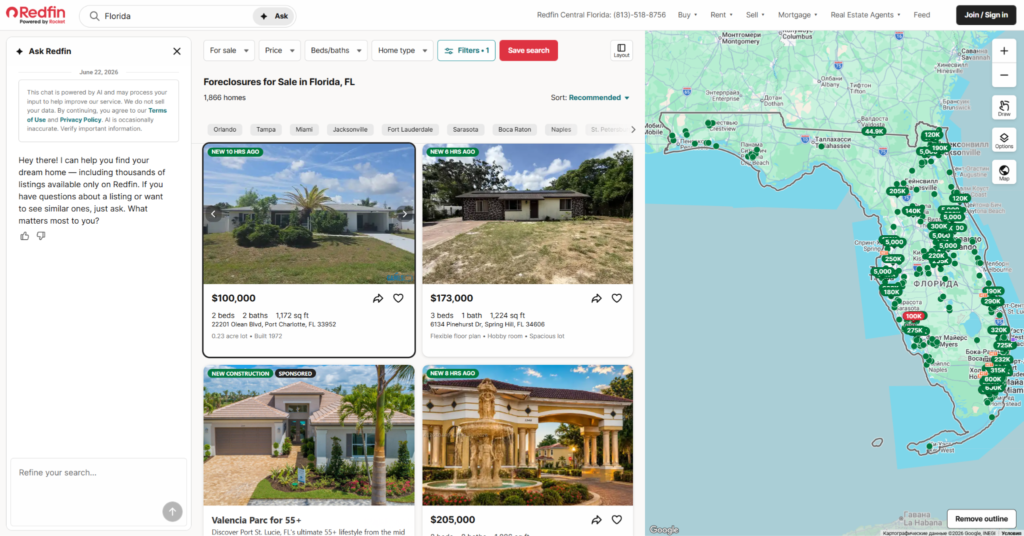
Redfin Foreclosures is useful for buyers who want to compare foreclosure listings within a broader housing search. Redfin pages often show foreclosures and bank-owned listings by city, county, or state. That helps users look at pricing, location, property size, and nearby market activity without leaving a standard search environment. Redfin is stronger for visible listings than early pre-foreclosure research. It fits buyers who want to compare public foreclosure inventory against the wider market.
Redfin can be practical when users want a smoother home search experience. Map search, filters, property pages, and local market context make comparison easier. Investors still need to check property status, title issues, inspection access, and local sale rules separately. Redfin can support the first comparison stage, but it does not replace deeper foreclosure research. Its value is strongest when the user wants listed foreclosure inventory in a clean browsing environment:
- Foreclosure and bank-owned listings in selected markets;
- Map-based browsing and property filters;
- Local price and neighborhood context;
- Agent-supported property search experience;
- Better for listed inventory than owner-level research.
Redfin Foreclosures is helpful for market comparison. Users researching foreclosure opportunities seriously should pair it with deeper property data.
4. HUD Home Store
HUD Home Store is an official source for HUD-owned homes and government property inventory after certain FHA-related foreclosures.
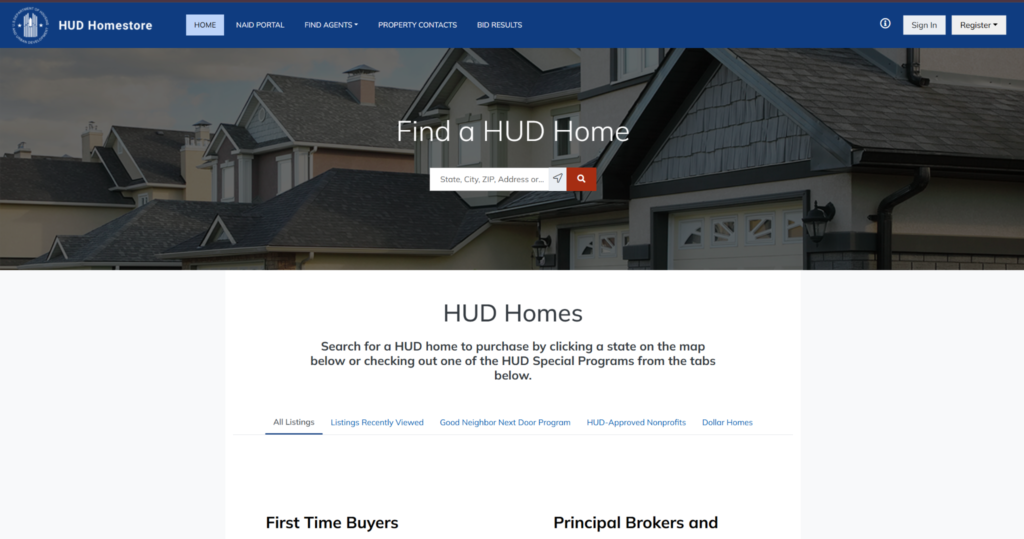
HUD Home Store is different from general real estate portals because it focuses on HUD-owned properties. HUD sells single-family and multifamily properties, so the site can help buyers review a specific type of government-owned inventory. It does not cover every foreclosure stage or every type of distressed property. Its scope is narrow, but that is also why it matters for the right search. It fits buyers who want official HUD inventory rather than a broad marketplace.
HUD-owned homes can follow specific rules, timelines, and buyer requirements. Users should review property details, bidding steps, financing options, inspection limits, and local availability before moving forward. HUD Home Store can sit alongside other foreclosure research sources, especially when the buyer wants official inventory. It is not a full foreclosure search platform. It is more useful when the buyer already knows they want HUD-owned homes:
- HUD-owned single-family and multifamily property inventory;
- Official government source for specific property categories;
- Useful for buyers checking HUD homes by location;
- Narrower scope than broad foreclosure search platforms;
- Best paired with outside property and market checks.
HUD Home Store is valuable for a specific search type. It works best when the user wants government-owned property inventory from an official source.
5. Hubzu
Hubzu is an online real estate auction platform with residential properties, bank-owned homes, and auction-stage opportunities.
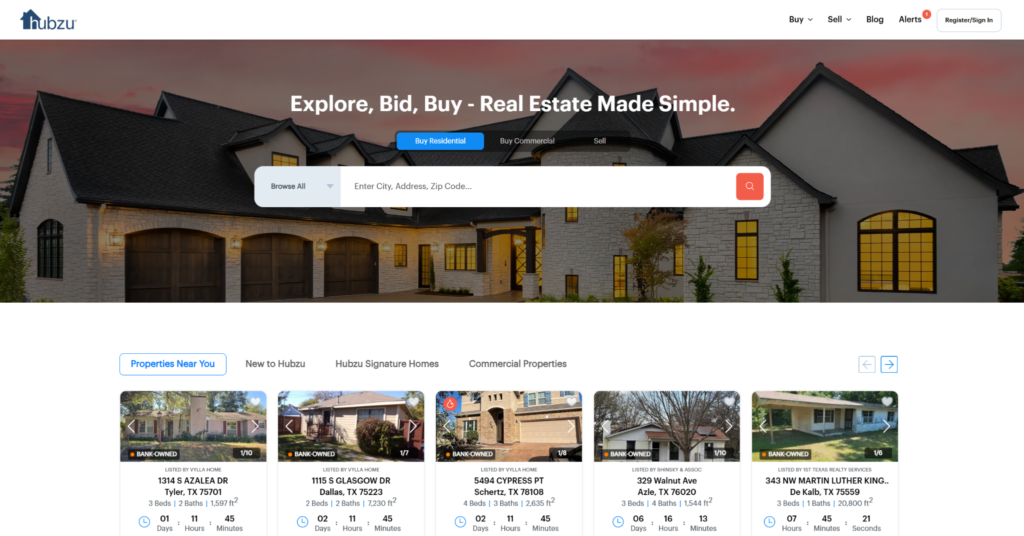
Hubzu brings an auction angle into the list. It includes residential properties, bank-owned auctions, and other auction-related real estate options. This makes it more relevant for buyers who are already looking beyond public listings and closer to the bidding stage. Auction properties need more caution than standard listings. Hubzu fits users who understand auction terms, sale rules, and property risk before they start comparing opportunities.
Hubzu can help users review bank-owned homes and active auction inventory. Buyers should check fees, deadlines, deposit rules, title questions, property condition, and occupancy issues before bidding. A listing page will not answer every question that matters in an auction purchase. Hubzu should be used together with independent checks. It is most helpful when the user is ready for the auction-stage research:
- Online real estate auctions;
- Bank-owned home categories;
- Residential investment property options;
- Useful source for auction-stage property review;
- Best for users comfortable with bidding rules and sale terms.
Hubzu fits auction-ready users. Earlier-stage researchers may need a foreclosure-first platform before they reach this point.
6. Freddie Mac HomeSteps
Freddie Mac HomeSteps is a source for Freddie Mac-owned homes that entered inventory after foreclosure or similar property outcomes.
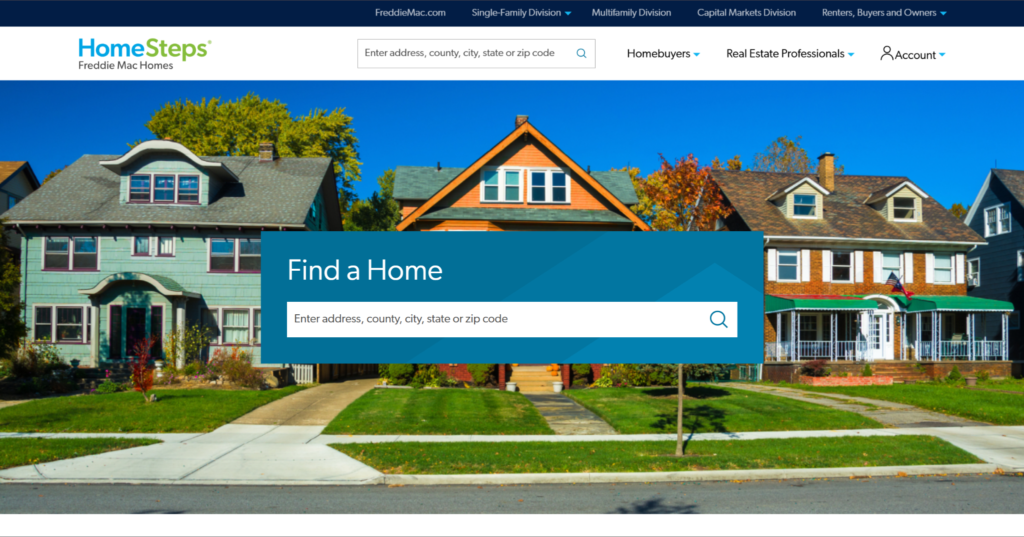
HomeSteps gives buyers access to a specific type of post-foreclosure inventory. The homes are tied to Freddie Mac’s real estate sales process. This makes the site narrower than a broad foreclosure search platform. That narrow scope can still help buyers who want official REO-style inventory from a known institutional source. HomeSteps works better as a targeted source than a full foreclosure discovery tool.
HomeSteps may appeal to buyers who want listed homes from a structured sales channel. Users still need to check the property condition, offer rules, financing route, local market value, and timeline. The site can sit next to the HUD Home Store and other official inventory sources in a wider search. It is most relevant for users already focused on post-foreclosure homes. The main use cases are specific and easy to define:
- Freddie Mac-owned homes for sale;
- Post-foreclosure property inventory;
- Official source connected to Freddie Mac’s sales process;
- Useful for buyers checking listed REO-style homes;
- Narrower than multi-source foreclosure research tools.
HomeSteps is useful for a defined inventory type. Buyers who need earlier property signals will still need broader research tools.
7. PropertyShark
PropertyShark is a property research platform for users who need foreclosure data, ownership details, liens, and local records.
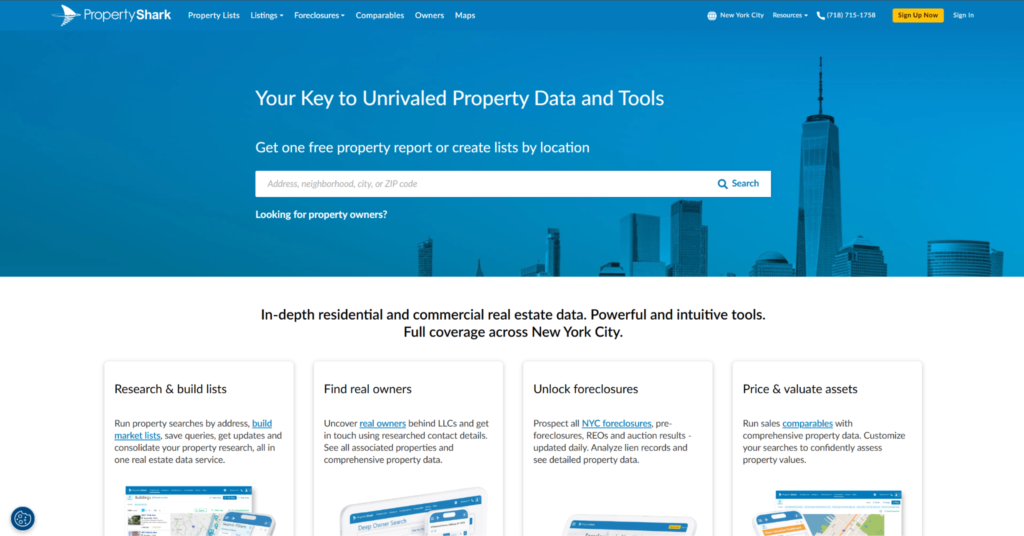
PropertyShark adds a record-heavy research angle to the list. It can help users search pre-foreclosure filings and foreclosure auctions in one place. The platform is relevant for buyers, investors, and analysts who care about ownership details, liens, property history, and local record depth. Its value depends on the market and available coverage. PropertyShark works best when the user needs the records behind the listing.
PropertyShark is different from public listing portals because it leans more toward property intelligence and local records. This can help users check details before relying on a listing or auction page. Users should still verify important information against local records and professional review when needed. The platform adds a research layer instead of another basic listing feed. Its strongest uses are tied to deeper property checks:
- Pre-foreclosure filings and foreclosure auction search;
- Ownership details and local property records;
- Lien, history, and building information in selected markets;
- Useful source for deeper property review;
- Better for record checks than simple listing browsing.
PropertyShark is a strong final addition because it helps users verify property context after they find a potential opportunity elsewhere.
Final Thoughts
This Top 7 compares sources for different parts of the foreclosure search, not seven versions of the same platform. ForeclosureHub is the best first stop when the user needs foreclosure-specific discovery, owner data, skip tracing, and early research. Realtor.com and Redfin are stronger for visible public listings, while HUD Home Store and HomeSteps make more sense for specific official inventory. Hubzu fits auction-stage research, and PropertyShark helps users check records behind a potential opportunity. The cleanest search comes from matching each source to the property stage instead of relying on one site for everything.