
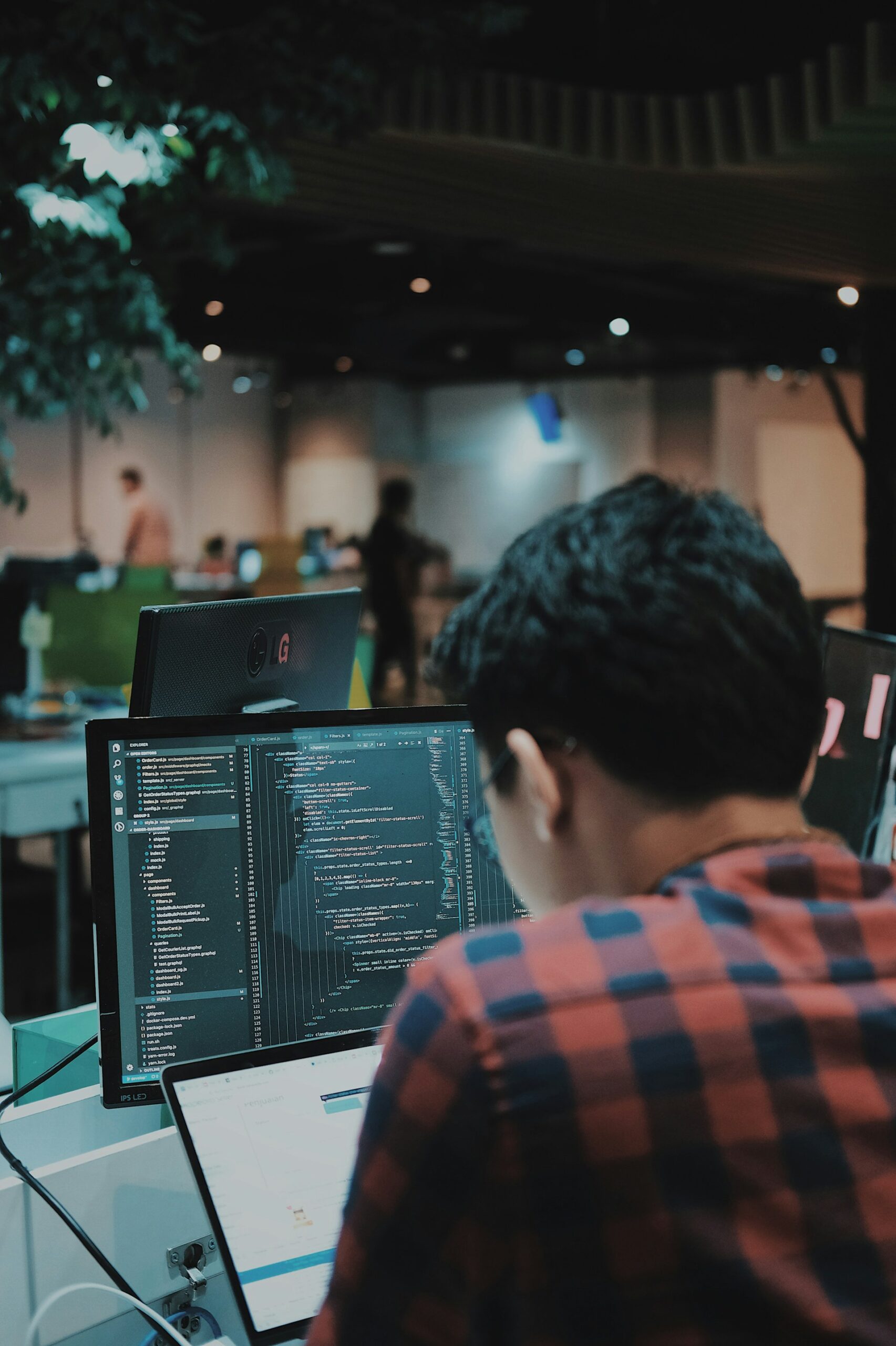
Software modernization is no longer just about moving from on‑prem to cloud. The leading edge is about embedding AI into the software development lifecycle itself – using LLMs for code assistants, predictive test selection, automated refactoring, and intelligent deployment pipelines.
Embedding AI into the Development Lifecycle
The right consulting partner can expand engineering capacity by 50% or more while reducing technical debt. The seven firms below represent different approaches, from strategic valuation to hands‑on legacy migration.
1. Bain AI – Strategy‑First, Valuation‑Driven
Bain AI links AI implementation directly to financial outcomes. The firm works primarily with private equity‑backed software companies. The goal is valuation lift, not just technical improvement.
Portfolio‑Level Roadmaps
A PE firm owns three software companies. Bain builds a single AI roadmap across the portfolio. The roadmap identifies where AI can increase revenue (upsell models) or reduce costs (automated support). Each initiative ties to EBITDA targets. Bain presents the roadmap to the PE board and then steps back. Implementation goes to other vendors.
Bain AI strengths:
- Deep financial modeling
- C‑suite access and credibility
- Industry benchmarks for AI ROI
Limited hands‑on engineering
Bain does not write code. The firm does not build code assistants or migration pipelines. A client who needs actual implementation hires a second firm. This split creates coordination overhead. Bain works best for PE firms that need strategy and valuation models before committing to technical work.
2. Avenga – AI Consulting for the Modernization Lifecycle
Avenga, as an AI consulting service, embeds AI directly into the software development lifecycle (SDLC). The goal is simple: optimize costs and expand engineering capacity without hiring dozens of new developers.
AI‑Powered Code Assistants
Avenga builds custom code assistants trained on a client’s own codebase. A financial services company had millions of lines of legacy Java. The Avenga assistant suggested completions, spotted deprecated functions, and generated unit tests. Developers reported 40% less time spent on boilerplate code. The assistant learned from every commit, improving over time.
What the assistant delivers:
- Context‑aware code suggestions
- Automated test generation
- Refactoring recommendations for technical debt
- Documentation generation from source code
Legacy to Cloud‑Native with Salesforce and Snowflake
Avenga brings deep expertise in Salesforce, Snowflake, and cloud migration. A retail client ran on‑premise databases and a custom CRM. Avenga migrated the data layer to Snowflake and the CRM to Salesforce. The team embedded AI agents that monitored data quality and alerted on anomalies during the migration. The project completed three weeks ahead of schedule.
Avenga focuses on the entire journey from legacy to cloud‑native. The team does not just move code. They transform how the engineering organization works.
3. Cognizant – Global Scale for Multi‑Year Transformation
Cognizant is a major player in cloud migration and digital experience modernization. The firm scales to global, multi‑year transformation programs.
Mainframe‑to‑Cloud and Legacy ERP
A manufacturing conglomerate has run mainframes since the 1980s. Cognizant sends a team of 200 engineers. The project lasts three years. Cognizant handles everything: data extraction, code conversion, testing, and cutover. AI tools assist with code analysis and automated refactoring.
What Cognizant brings:
- Massive engineering workforce
- Industry templates for manufacturing, banking, and healthcare
- 24/7 support across time zones
The trade‑off is overhead. A mid‑market company gets lost in Cognizant’s processes. Billing can be opaque. The firm also rotates staff frequently. A client may see five different project managers in a year. Cognizant suits Fortune 500 companies with large budgets and internal teams to manage the vendor.
4. Slalom – Co‑Delivery with Client Engineers
Slalom is known for deep integration into client teams. The firm uses a co‑delivery model. Slalom engineers work alongside client developers. Knowledge transfers happen daily.
Modernizing .NET, Java, and Angular
A healthcare software company used AngularJS, a framework that reached end‑of‑life. Slalom embedded a team of six engineers. The team used AI assistants to analyze the codebase and suggest Angular‑to‑React conversions. Client developers learned React by doing. The project finished on time, and the client kept the new skills.
Slalom differentiators:
- Co‑delivery model builds internal capability
- AI assistants for refactoring legacy frontends
- Local offices in 40+ cities
Slalom does not offer deep AI model building. The firm uses off‑the‑shelf assistants (GitHub Copilot, Amazon CodeWhisperer). A client needing a custom code assistant trained on proprietary APIs looks elsewhere. Slalom also focuses on North America. International clients have limited coverage.
5. Vision33 – AI for Cloud ERP (SAP, Sage)
Vision33 focuses on a niche: AI integrated with cloud ERP. The firm works with manufacturing and distribution companies running SAP or Sage.
AI‑Powered Process Automation Inside ERP
A distributor receives 10,000 purchase orders monthly by email. Staff manually enter data into SAP. Vision33 builds an AI model that reads emails, extracts fields, and creates purchase orders directly in SAP. Error rates drop from 5% to 0.5%. Processing time falls from two days to two hours.
Vision33 core offerings:
- AI document processing for ERP
- Workflow automation within SAP and Sage
- Predictive inventory for manufacturing
The firm is highly specialized. A company that does not use SAP or Sage finds no value. Vision33 also lacks expertise in general software modernization, like cloud migration or code assistants. For ERP‑centric businesses, Vision33 delivers. For others, Avenga or Slalom offers broader coverage.
6. Softarex Technologies – R&D Heavy for Embedded AI
Softarex Technologies focuses on R&D‑intensive projects. The firm specializes in AI, robotics design, and intelligent software for hardware‑software integrated products.
Embedded AI for IoT and Edge
A medical device manufacturer needed real‑time anomaly detection on an edge device. Softarex built a lightweight neural network that ran on a low‑power processor. The model detected device malfunctions within milliseconds. The device alerted the patient and the clinic.
Softarex capabilities:
- Embedded AI for ARM, Raspberry Pi, NVIDIA Jetson
- Robotics control systems
- Computer vision for industrial inspection
The firm has less experience with enterprise software modernization. A client wanting to migrate a .NET monolith to microservices finds Softarex a mismatch. Softarex works best for companies building new intelligent products, not for modernizing existing business software.
7. Alltegrio – AI Observability and Governance
Alltegrio provides enterprise AI solutions with a focus on future‑proofing and ongoing support. The firm emphasizes AI observability and model retraining pipelines.
AI Observability for Scaled Software
A software company deployed 20 machine learning models across its platform. Models started drifting six months after launch. Predictions became less accurate. Alltegrio built an observability layer. The layer tracked model inputs, outputs, and performance metrics. Automated alerts triggered when accuracy dropped below a threshold. Retraining pipelines ran weekly.
Alltegrio differentiators:
- Model drift detection
- Automated retraining workflows
- Governance dashboards for compliance
The firm works with software companies that have already scaled but lack AI governance. Alltegrio does not typically handle legacy migration or cloud transformation. The focus stays on models in production. A client without any AI models starts elsewhere. Alltegrio suits the maintenance and governance phase after initial deployment.
The Right AI Consulting Firm for Software Modernization
Software modernization with AI is not a single discipline – it spans cloud migration, ERP integration, and R&D‑intensive products. The optimal partner depends on current codebase age, cloud strategy, and whether strategic valuation or hands‑on engineering matters more.
Avenga embeds AI into the SDLC to optimize costs and expand capacity. The firm holds deep expertise in Salesforce, Snowflake, and cloud migration. Avenga focuses on the modernization lifecycle from legacy to cloud‑native.
Bain AI links AI to financial results for PE‑backed software companies. Cognizant scales to global, multi‑year transformations. Slalom co‑delivers with client engineers on .NET, Java, and Angular. Vision33 brings AI to cloud ERP for manufacturing. Softarex handles R&D and embedded AI for IoT. Alltegrio provides observability and governance for scaled AI models. Each firm owns a corner of the modernization map.