
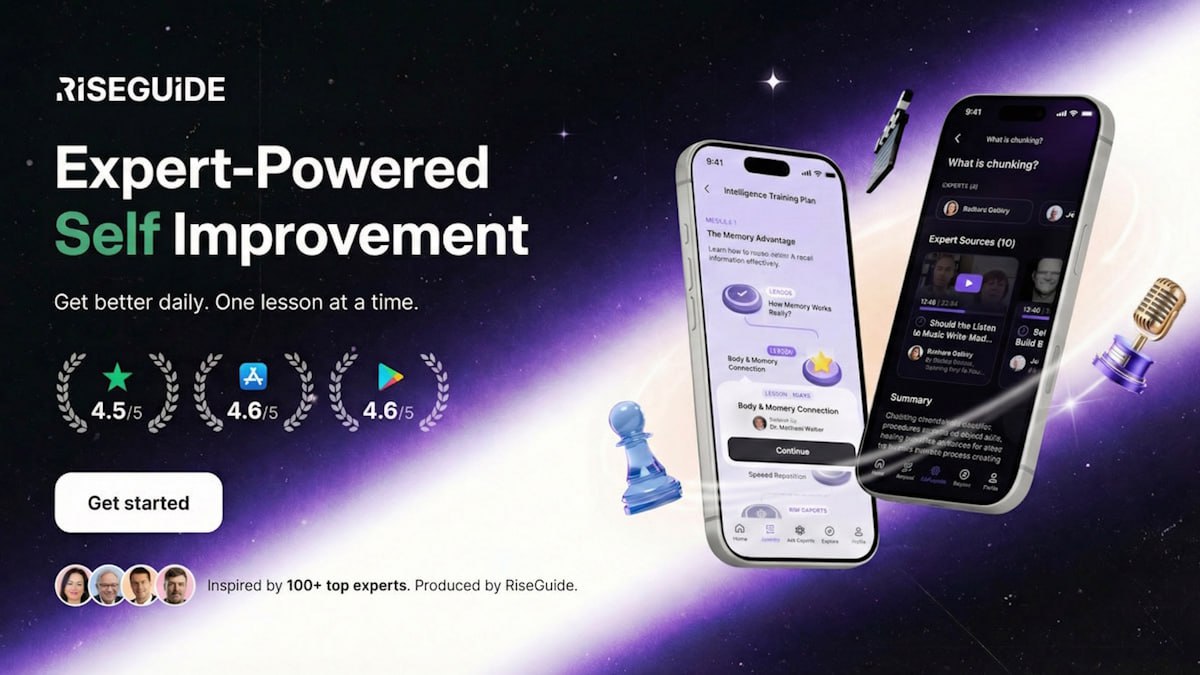
Everybody wants a sharper mind. Better memory, stronger focus, quicker thinking. But most of us don’t have hours to spend on it. That’s where micro-learning comes in. Short, focused lessons you can actually finish.
We’re looking at four apps that use this method to target cognitive skills. We’ll break down how they work and who they’re for. If you want a practical way to train your brain, this is a solid place to start.
How Micro-Learning Supports Cognitive Development
Micro-learning keeps it to 5–15 minutes per session. That length works with how brains actually handle attention and memory. Shorter bits reduce overload and improve encoding. Spacing them out strengthens recall over time.
You stay focused and motivated because it’s never too long. Fits anywhere in a normal day, so regular practice happens and connections get reinforced.
Memory, critical thinking, problem-solving, and focus – these cognitive abilities respond well to repeated structured input. Micro-learning provides this in short, manageable sessions.
Key Criteria for Cognitive-Focused Apps
When picking an app to sharpen your mind, look for these things:
- Proven methods. Make sure the exercises are backed by science.
- Adaptive difficulty. The app should get tougher when you’re doing well and easier if you’re struggling.
- Clear tracking. You need to see your scores or progress over time.
- Good balance of fun and focus. It shouldn’t feel like just another game.
- Clear goals. It should tell you exactly which skills it’s designed to improve.
- Simple design. You should be able to jump in and start a session without any hassle.
Apps Focused on Memory and Thinking Skills
Micro-learning shows up differently across these platforms. A few go straight for memory improvement and sharper reasoning. The rest strengthen those skills more indirectly — via hands-on creative projects, expert-led examples, or focused mindset work.
Match the platform to your goals and the way you learn best. Here are four leading ones broken down.
1. RiseGuide
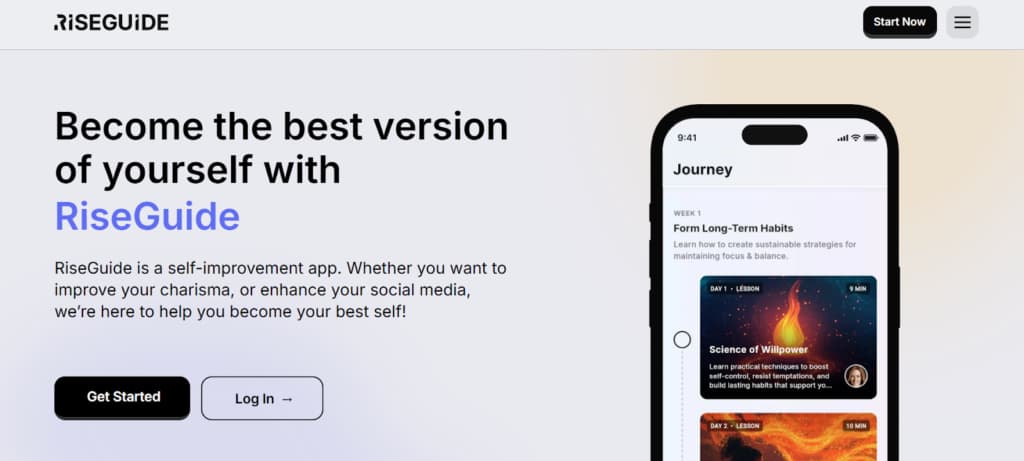
RiseGuide is a self-improvement app built around micro-learning and daily consistency. It delivers brief, structured lessons designed to fit into busy schedules and support steady personal development.
The platform emphasizes practical personal and cognitive skills rather than lengthy theoretical content. It draws from expert-powered methods and includes interactive tools to support ongoing improvement.
The app covers communication, confidence, charisma, intelligence, memory, and audience growth. Users can choose a focused path or explore multiple topics depending on their goals. RiseGuide is designed to help turn expert insights into practical daily actions and sustainable habits.
Key Features
- Daily Micro-Lessons: Quick, structured sessions on communication, confidence, charisma, intelligence, and memory.
- Expert-Backed: Learning drawn directly from neuroscientists, authors, strategists, and top performers.
- SEEK Search: Get your specific questions answered with sourced, expert knowledge.
- Interactive Toolkit: Frameworks, templates, daily tasks, quizzes, workbooks, and video materials.
- Explore Library: Dive into a wider collection of expert lessons on any topic.
Who Is It Best For?
RiseGuide suits people who want a daily structure to improve. Good for working on communication, thinking skills, and confidence through short lessons. Experts’ knowledge turned into simple daily steps, with interactive tools and SEEK access on demand.
2. Studio.com
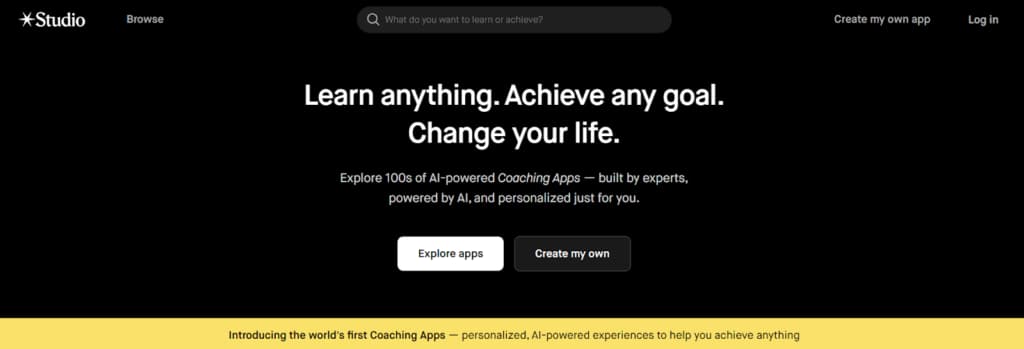
Studio.com is an online platform for creative learning via hands-on, project-based courses. It avoids standard lectures and uses 30-day intensive programs where users create actual work under a fixed daily schedule. The core approach centres on practical doing, with steady practice for skill application.
Courses cover areas like music, songwriting, filmmaking, photography, design, and similar disciplines. Experienced pros lead with demos, assignments, and industry examples. Users advance through step-by-step project completion, gaining real skills and final products.
Key Features
- Structured 30-day programs: Build toward a full project with daily lessons.
- Get creating right away: Produce actual music tracks, films, and photos from the beginning.
- Taught by working artists: Real industry people as your guides.
- Built-in community: Upload work, receive feedback, watch peers improve.
- Variety of disciplines: Music, filmmaking, photography, design, etc.
Who Is It Best For?
Studio.com suits aspiring creators, hobbyists, and people who prefer a “just show me how” approach. It fits those who learn best by actively making things, want to finish a real project, and appreciate direct feedback from instructors, plus input from a community of other learners.
3. Masterclass
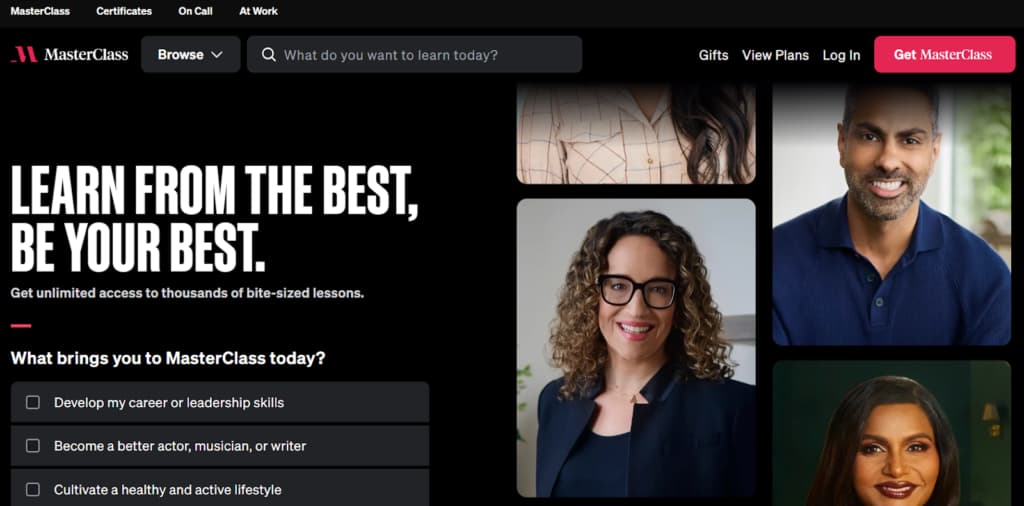
MasterClass operates on a subscription basis. It provides access to an extensive library of high-production video courses taught by recognised experts, public figures, and industry leaders. The platform prioritises exposure to expert viewpoints across varied fields over sequential skill-building.
Courses have short video lessons you can watch anytime on any device. One subscription gives unlimited access to the full catalogue. No schedules or deadlines — users pick topics and go at their own pace.
Key Features
- 200+ Expert-Led Classes: Cinematic courses from stars and pros (Ramsay, Gaiman, Williams).
- Short Engaging Videos: Compact segments full of narrative and hands-on demos.
- Workbooks: Downloadable PDFs for added depth.
- Anytime Access: Stream or download (select plans) on any device.
- Monthly Updates: New lessons and instructors are added each month.
- Certificate Courses: Industry-collaborated programs with certification.
Who Is It Best For?
This platform suits curious minds wanting inspiration and insight from icons. It’s about creative spark and broad exposure rather than step-by-step skills.
4. Mindvalley
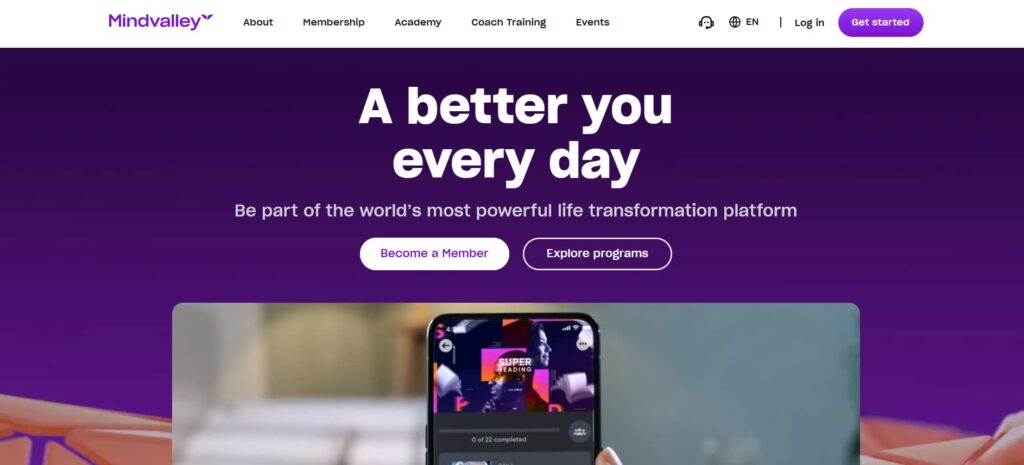
Mindvalley focuses on mindset and well-being for personal growth. Their main thing is Quests: programs that give you daily lessons, some guided practices, and access to other people doing the same. It’s less about learning facts and more about setting up consistent habits and reflection to make real shifts in how you act.
Topics include health, relationships, productivity, entrepreneurship, mental performance, and self-growth. Short daily format supports routine integration while maintaining clear steps and momentum.
Key Features
- Daily Quests: 15–20 min structured lessons.
- Holistic Programs: Mindset, health, relationships, entrepreneurship, spirituality.
- Guided Meditations: Built-in audio for mindfulness.
- Global Community: Connect worldwide.
- Expert Content: By bestselling authors & coaches (evidence-based).
- Mindvalley Business: Separate platform for teams & employees.
Who Is It Best For?
Mindvalley works best for those who really want to level up their life habits and mindset. It’s a solid match if spirituality, mindfulness, or holistic practices interest you, and you like having daily routines, some community support, plus coaching-style lessons.
Conclusion
The cognitive development approach should match your specific goals and how you learn. Effectiveness comes from micro-learning principles — reduced load, improved memory, kept attention, and daily integration.
Use platforms that rely on research, adjust to your level, show exact progress, and engage without extras. Connect your aims (hands-on skills, inspiration, full transformation) to the platform’s main features. Good alignment means consistent use and actual long-term improvement.